

Masking: The Camouflaging Reality
- Advancells Stem cell therapy

- Apr 11, 2022
- 2 min read
Autistic masking is the intentional or unintentional control of normal autistic responses. It is the trying to hide or controlling behaviours attributed to autism spectrum disorder (ASD) that could be considered inappropriate in certain situations. Autistic people may feel compelled to display or perform neurotypical social behaviours or to conceal neurodiverse behaviours in order to be understood and fit in.
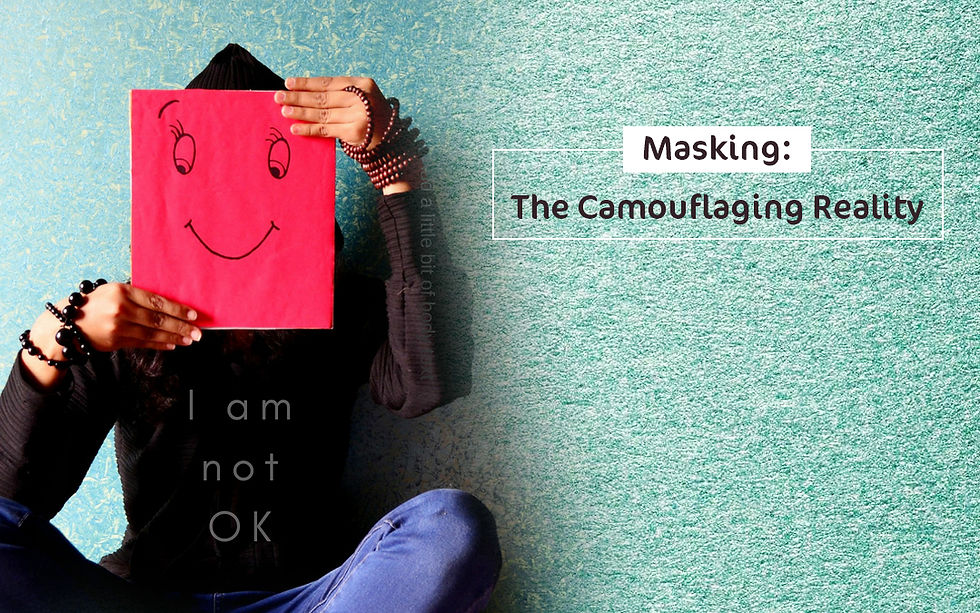
To overcome being publicly humiliated or harassed at work or school, an autistic person might really mask. It can make an individual feel safe from misunderstandings but it has a negative impact on one's personality and self-esteem. Masking can play a role in autistic burnout, which arises when a person's resources are exhausted by life's challenges. It can have serious consequences on both the mental and physical health of an individual.
Signs of Autistic Masking
Masking is a social survival strategy, that can take various forms depending on the person. Here are some of the signs of masking:
Faking or forcing eye contact while talking
enduring intense sensory distress, including loud noises
trying to imitate gestures
disguised stimming behaviours
building a variety of rehearsed answers to questions
practising a variety of rehearsed answers to questions
mimicking smiles and other expressions of people
concealing or downplaying personal interests
Why do they mask?
There could be a plethora of reasons why a person on the autism spectrum is masking oneself. Some of them could be:
wishing to blend in rather than stand out from the crowd
to fit in well at work or with colleagues
to avoid bullying, emotional assaults, being harrassed and to maintain personal safety
for building up a better relationship with others
To minimize the chances of failure in life
In order to avoid discrimination from other people
The Effects of Masking
Masking may be prevalent in environments with insufficient support for neurodiverse people or where people on the spectrum are in serious jeopardy. While masking has some benefits, it is essential to note that it has major downsides.
Moreover, the energy expended in mimicking neurotypical behaviours can lead to social stress. Here are some of the consequences of frequent masking:
Loss of identity
Anxiety and stress
Exhaustion
Depression
Autistic Burnout
Offering support is the key!
The most important thing we can do is enlighten ourselves about autism in order to improve our acceptance and understanding of neurodiverse people. Nobody should be forced to change who they are in order to impress another human. An initiative to minimize the negative impacts of masking autism is to strive for an environment in which neurodiverse people are accepted for who they are and people are treated with the utmost respect and regardless of whether they communicate in neurotypical ways or not.
Every educational programme should include autism training. The more we learn and understand about autism, the less stereotype and pressure autistic people will face when attempting to fit in.
Drop your queries at info@advancells.com for more information on Autism Spectrum Disorder. You can also call us at +91-965421400 for a consultation on stem cell therapy for ASD.


Comments